The advantages of auxiliary arch support products for chronic ankle instability
As winter arrives, individuals with chronic ankle instability may find themselves walking cautiously, relying on swinging movements, exerting extra effort to move forward, and experiencing a tendency to stumble with the slightest relaxation. Visits to hospitals may result in the purchase of crutches, and without proper recovery, recurrent incidents of ankle sprains may occur.
Jerryfootprint
5/8/20244 分読む
The choice of wearing leather pants with layered cotton trousers likely has its reasons. Let's discuss some possible causes:
Congenital Ankle Structural Abnormalities: In cases of congenital anomalies, misalignment of force lines may lead to prolonged instability in the ankle joint, significantly increasing the risk of tissue abrasion and sprains around the joint.
Ankle Sprains: Often overlooked, mild ankle sprains occurring during regular activities or sudden loss of proprioception during exercise can be significant. Subtle symptoms may mislead individuals into thinking that rest will lead to self-recovery, laying the groundwork for chronic and lingering injuries. This may manifest as habitual ankle twisting, even on level ground, and a feeling of weakness or instability when the ankle encounters uneven surfaces.
Avoidance of Pain Leading to Uneven Pressure: Prolonged reliance on avoiding pain can create a false sense of proprioception, causing an uneven distribution of pressure on one side of the ankle joint. This can lead to increased stress and instability.
Accidental Injuries: While unpredictable, enhancing overall physical fitness can help minimize the impact of accidental injuries.
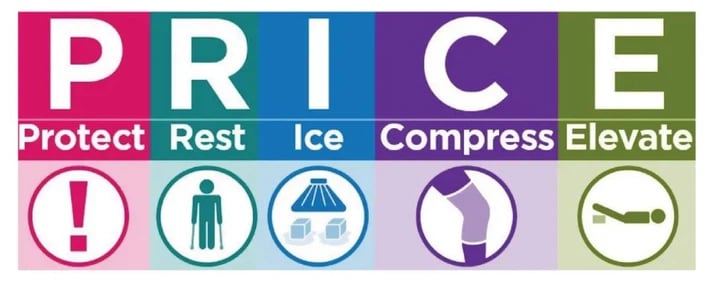
Immediate Treatment for Ankle Sprains:
Elevate the affected area immediately to reduce swelling by keeping it higher than the heart.
Immobilize the area to prevent further injury by avoiding movement, reducing blood circulation, and preventing worsening of the condition.
Apply ice to the affected area for 1-2 minutes at a time, totaling 15-30 minutes. Caution should be exercised to prevent frostbite, and excessive duration of ice application should be avoided.
Apply pressure to reduce swelling, maintain shape, and prevent secondary injuries.
Rest and seek medical attention, with severe cases requiring a visit to the nearby hospital (orthopedics, ankle and foot surgery, emergency department, sports medicine, etc.). Even for mild cases, further examination is necessary to prevent hidden injuries from developing into chronic conditions.
Post-Immediate Treatment and Rehabilitation:
Regardless of the severity of the injury, further rehabilitation or the use of assistive devices should be considered after initial treatment.
Assistive Device Therapy:
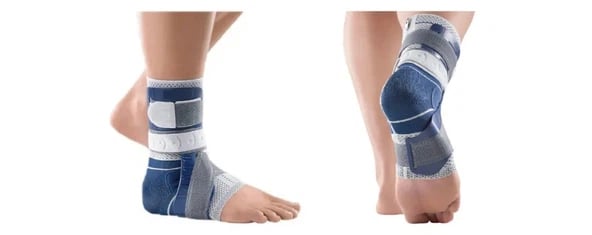
Ankle supports, foot orthoses, and other support devices can gradually transfer weight to the affected side through external support.
Rehabilitation Therapy:
Early-stage rehabilitation (conservative treatment) involves initiating movement in other small joints, such as toe joints and metatarsophalangeal joints, as well as larger joints like the knee and hip. Active muscle flexion, joint flexion, and extension aid in muscle strength recovery.
Mid-stage rehabilitation occurs when joint mobility reaches 80%. Weight-bearing is gradually introduced with the assistance of walking aids, starting from toe-touch and progressing to larger weight-bearing exercises.
Late-stage rehabilitation, around 3 months, focuses on full-weight-bearing exercises, including the restoration of ankle joint mobility and recovery of muscle strength. Functional rehabilitation exercises for daily activities are emphasized. Through a continuous and progressive rehabilitation process, the ankle generally achieves ideal postoperative outcomes.
Prevention of Chronic Ankle Instability:
Preventing chronic ankle instability is significantly more beneficial than treatment. Prevention measures include proper and proactive treatment of acute ankle sprains, improving flexibility, balance, proprioception, and muscle strength to reduce the risk of recurrent ankle sprains. Wearing suitable protective and supportive gear during physical activities also helps minimize the probability of re-injury.
In the prevention and treatment of chronic ankle instability, supportive arch shoes play a crucial role. Here are some recommendations:
Role of Arch Support Shoes:
Providing Additional Support:
Arch support shoes, with a designed arch structure in the sole or insoles, offer extra support, aiding in maintaining normal foot structure and function.
Improving Gait:
Certain arch support shoe designs promote a normal gait, alleviating the burden on the ankle joint and feet, and helping reduce instability.
Alleviating Pain:
Appropriately designed arch support shoes can distribute pressure on the sole, relieving joint and soft tissue pain and enhancing overall comfort.
Correcting Foot Deformities:
For individuals with foot deformities or abnormal arch structures, some arch support shoes are designed to address and correct these issues.
Considerations When Choosing Arch Support Shoes:
Personalized Adaptation:
Different individuals have varying foot structures and needs, so the choice of arch support shoes should consider personalized adaptation. It is advisable to seek guidance from a professional shoe store or a healthcare provider.
Comfort:
Arch support shoes should provide sufficient comfort to ensure prolonged wear without causing discomfort. Proper shoe type and size are crucial considerations.
Activity-Specific Design:
If the individual engages in specific physical activities, ensure that the arch support shoes are suitable for these activities, providing necessary support.
Professional Advice:
Before selecting arch support shoes, consulting with a healthcare provider or a specialized rehabilitation expert is recommended to ensure that the chosen footwear aligns with the treatment needs.
By integrating the use of arch support shoes with physical therapy, rehabilitation exercises, and other methods, a more comprehensive approach can be taken to manage and prevent chronic ankle instability, ultimately improving the quality of life for individuals.
Jerryfootprint
Premium footwear manufacturer with 15+ years of experiense. Specializing in biomechanical innovation.
Quick Navigation
Copyright © 2019-2026 Xiamen Jerryfootprint Imp&Exp Co., Ltd. All Rights Reserved.
OUR NETWORK
SUPPORT
Altafit Corp
APMA Certificate List